Showing posts with label training tips. Show all posts

Saturday, April 22, 2017

How to Train for and Run a Marathon: A Non-Exhaustive Shortlist

In training:
  1. Stick to the training schedule.
  2. Run at times of day similar to the scheduled race time to get used to what might happen on race day e.g. waking up early enough, eating breakfast, prepping gear, getting dressed, stretching and warming up, etc.
  3. Run in all kinds of weather - because you never know what you're gonna get on race day.
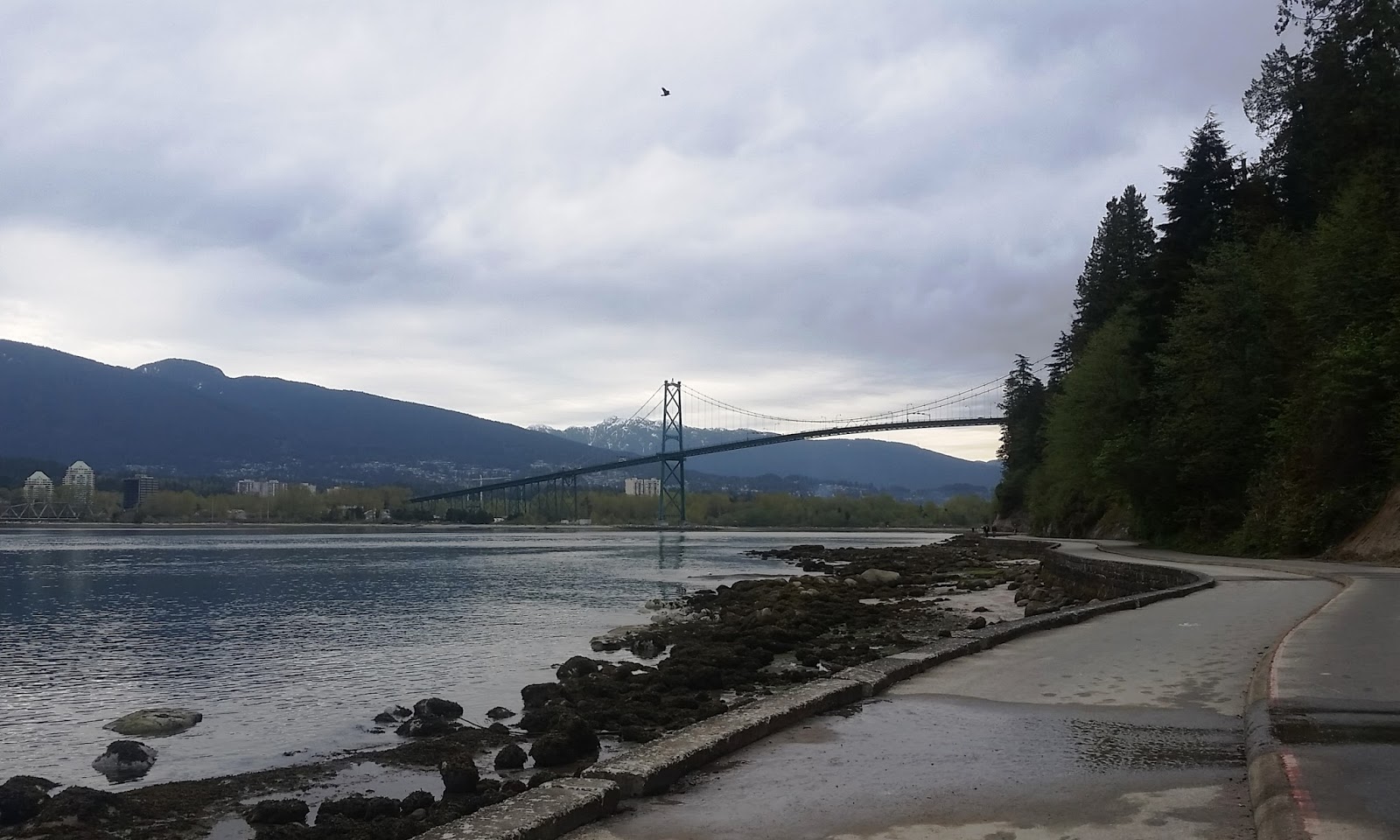
    I was here... and here, and here...
  4. Run on the same surface as the race to condition your body for similar impact e.g. concrete or trails versus treadmills.
  5. Pay attention to your diet (nutrition is important).
  6. Stay hydrated.
  7. Get enough sleep.
  8. Find someone who knows more than you about running and ask them lots of questions about everything you don't know - but know that not everything works the same or as well for everyone. 
  9. Find a good registered massage therapist and visit him/her as often as you can.
  10. Find a good physiotherapist and consult him/her as needed.
  11. Give yourself lots of encouragement every day.
  12. Surround yourself with people who support your goals. 
  13. Ignore the "Negative Nancies" and "Downer Dougs".
  14. Don't be a douchebag runner to other runners. This includes not being a "Negative Nancy" or "Downer Doug."
Specifically for race day:
  1. Get enough sleep leading up to the race (tip: even a good night's sleep two nights before versus the night before the race can be enough - just try and stay well rested as race day approaches).
  2. Don't try or do anything new e.g. with clothing (potential chafing), gear (unexpected issues with weight, function), breakfast, gels or other nutrition (avoiding digestive issues), etc.
  3. Get to the start line with time to spare.
  4. Enjoy the race! You've earned it.
Journal entry 

Today's run: 23 km and technically, the last LSD in the training schedule. Yay for tapering! Weather: overcast and partly sunny this morning, which is why I deliberately went out early (note: it's raining now but at least I'm watching the bad weather from my couch instead of being in it). Feeling: glad to have missed the rain! And looking forward to the rest of the weekend.
...and also here.

Tuesday, April 18, 2017

Running Round-up: Happy Belated Easter Edition

Spring has sprung.
Now... will it stay??
This past weekend was spent by many enjoying Easter egg hunts and eating chocolate. Me? I got plenty of sleep and waited for the best day forecast in the long weekend to run 32 km - the last big long run in the training schedule before the mileage tapers off. 

Fundraising update: less than $500 to go!
My campaign has levelled off at $3,001, just about $500 shy of my fundraising target of $3,500. This means, if only 34 more people gave $15 each, or 20 people gave $25 each or 10 people gave $50 each (I mean, you get the idea, right?)... I'd make my goal! 

If you haven't yet donated, now is the time! Please visit my Team Diabetes fundraising page and give what you can. If you've already donated, muchas gracias, amigos. You're the best.

Huh. Who knew?
From The Runner's Book of Daily Inspiration, by Kevin Nelson (which I've mentioned on this blog before):
Your body is responding to what you're doing... you see it every time you run. The course seems shorter somehow... your running is smoother and easier. You want to run longer because you're more able to handle it.
After 16+ weeks of training, the above totally happened this weekend. And - honestly? It came as a really welcome surprise, as I was coming off extremely uncomfortable and personally disappointing long runs in the past few weeks. Sure, I'm still out there for four and half hours but where I used to bonk at 17 km, I feel like I'm just getting started. 23 and 26 km long runs on the schedule? No longer a terrifying prospect. I guess it's true what the trainers say: to get better at running, run more (within reason, of course). 

We like to leave lots of "chocolate eggs" for our
humans lying around everywhere.
Bunny trainers
Another Easter has come and gone and, as I'm lucky enough to live with two buns of my own year-round, I don't really feel the urge to gush over rabbits too much during this time of year. That said, here's a pic of them... you know, just in case you didn't get your fill of cuteness this holiday weekend. 'Til next time, friends.


Sunday, April 9, 2017

Running with Lady Cramps: A Special Kind of Hell

Preamble: I've hesitated to post anything too female-specific on this site, but seeing as more than half the population is made up of women, and all women have similar issues on this front - and betting that the majority of my readers are female - here we are.

Dudes: this post may be TMI (too much information) for you, depending on your comfort level with lady-specific issues. Proceed with caution. 

Menstrual cramps = the worst. Am I right, girls?

I've always thought it grossly unfair that women should have to endure such discomfort month after month: cramps, headaches, mood swings, nausea, bloating. Need I say more? (Stupid men.)

© Getty Images
In actuality, the menstrual cycle causes variations in hormonal levels throughout the month, with high levels of estrogen pumping through our systems right before ovulation but dropping really low during premenstruation - causing all sorts of great symptoms like many of the ones aforementioned, as well as sluggishness and fatigue. However, once menstruation starts up again, estrogen levels go back on the rise, resulting in energy going up as well (Kowalchik, 1999). 

About running while on a period... as running author Claire Kowalchik puts it, "Even if I'm feeling like I really don't want to run--the running seems effortless once I get going. In fact, I ran my fastest and easiest marathon on the first day of my period one year" (Kowalchik, 1999, p.140). 

At the risk of even more TMI, I've got my period right now. In the past, I've suffered debilitating cramps and menstrual headaches which would put me out for days, if not longer. So, this morning, and in the interest of deciding whether or not to give today's long run a try, I pulled Kowalchik's book off the shelf, flipped through her chapter on "Special Concerns as a Woman: Menstruation" and (re-)read her quote above. Buoyed by her experience, I decided to head out there... and also because I knew the alternative would be sitting on the couch, wondering if I should've at least given it a try. 

Long story short: SO UNCOMFORTABLE.

I deliberately chose a route that would keep me close to where I could bail and call a cab if things got really bad. While escape-by-cabbie did not end up happening, I came so close to doing so on multiple occasions. 

The first 40 minutes or so I thought - initially - were the worst. The menstrual cramping was bad, and so I just focused on breathing and throwing my feet out in front of me, one step at a time. Eventually, the cramps subsided... but then they came back... and then they subsided... and then came back. 

There seemed to be no pattern to it; they just came and went, seemingly as they pleased. And each time they came back, things got a little worse because I was getting longer into the run and more tired as the morning went on. 

At some point I realized there was nothing more important than focusing on running through the pain of my menstrual cramps. Pace, heart rate, gait... basically, all the things one should be concerned about while running... none of these things mattered more than just getting through this current cramp.

And then - it started to rain. And I cried. I couldn't help it. I was tired, uncomfortable and barely keeping my shit together as it was. So when the rain started, it kinda broke me a little.

But then I got over it - and lucky too as, soon after, I bumped into a friend who was also out for her run. Last thing I'd want while out running is to see someone I know, while bawling my eyes out. That's not good for anyone. 

Fortunately, after my mini-breakdown and bumping into my friend, I was about 6 km from home and towards the end of my run - just a bridge and a very familiar route left. 

But then, with about 3 km to go, the oddest thing happened. 

I realized I was going to be short on my run - by about 1/2 a km - and instead of living with it, I decided to stay out a little longer to make the distance for today. 

Fortitude. Who knew? It shocked the hell out of me to discover I had some left. 

Post-run was all about the protein and painkillers. And now - I sit, eat and will generally do nothing the rest of the day after publishing this blog post. I believe I've earned it.

Any of you ladies ever run while on your period? What was your experience? Hope it was better than mine. 

Journal entry for today
Today's run: 26 km. The schedule actually called for 29 km, but I decided to compromise given Aunt Flo was in town. My typical 29 km route would have taken me out to places where I couldn't call a cab if things went bad, so I opted for my 26 km route instead so I could have the option to abort if need be. Weather: the forecast called for partly sunny and no showers. Guess they got that one wrong. Feeling: glad to have done my run and finished so well, but I'll probably never run while on my period ever again. Strangely enough, even with all the menstrual cramps and negotiating with myself on whether to stay out there, I still felt better about this run than last week's 23 km run... the bad mood of which, I realize now, may have been due to depleted estrogen stores in addition to the massive hangover. Live and learn.

Source
Kowalchik, C. (1999). The Complete Book of Running for Women.

Saturday, March 25, 2017

Looking Into the LSD

LSD. No, not that, or even "Lucy in the Sky with Diamonds". I'm talking about the long slow distance run, like the one I did today. I've always wondered why marathon training programs typically top out at 32 km, so I looked into it. Here's what I found out.

Why 32 km?
The training program I've referenced for all of my marathons comes from the Running Room and, like many other programs, the longest distance to run in training is 32 km (20 mi). But why this distance, specifically, and not something closer to actual marathon distance of 42.2 km? According to the interwebs (Matz, 2014; Runner's World, 2014), the general theory is: anything longer can increase the risk of injury. Recovery also takes longer with any runs over 32 km. 

Hanson’s marathon training method (Humphrey, 2011) also outlines that running for more than three hours means diminishing returns for runners, doing more harm than good by damaging muscles, compromising recovery time, and depleting glycogen stores significantly (Matz, 2014).

At least I'm consistent.
Best to ignore that though, right?
The above, however, I believe does not apply to me. According to a trainer I worked with when I first ran with Diabetes Canada in 2009, the long run pace for those looking "to complete" i.e. no specific finish time goals should be "between 8:30 to 9:30 minutes per kilometer...if you are going faster you stressing [sic] your body to the point that it can not [sic] recover by the next quality workout" (email from Team Diabetes Trainer, 2009). Doing the math, this works out to what is my typical finish time for these long runs which is around four and a half hours.

So... I dunno
In summary, looking at all the information as a whole: I dunno what the right answer is. What I do know is that, until I got the above information from a trainer, I had been running too fast (for me) on my long runs and was well on my way to injury and burnout. Her advice saved me in training for my first marathon, and I successfully finished that marathon without getting hurt. And - looking at my data over the years and having finished three more marathons since then, I'd say that advice has served me well over the years.

If anyone else is slower, I sure haven't seen them
Logically, I know there are slower runners than me out there; finisher information from all of my races has told me that. But where they are? I sure as hell don't know. I don't pass anyone when I'm out there; I am definitely the one getting passed. Sometimes this bothers me, but then I remind myself of the distance I'm running and I usually get over it. 

...but then, what if they're running the same distance, only a lot faster than me? In those instances, I'm gonna guess that advice like Hanson's is for them. 

In conclusion...
With six more weeks of training to go, I'm gonna stick with what I know works. That means, slow long runs, soaking my legs in cold water, foam rolling, rest and shorter runs throughout the week. This way, I know that I can recover adequately from week to week. No pushing past what is realistic for me. No comparing myself to others and what I'm reading on the internet (even though that can be really hard to do). And - if I could - I would run this marathon tomorrow, mainly because I'm sick of training. But since that's not possible, all I can do is stay vigilant, and hope for nice weather and strong runs based on my current fitness level. 

Journal entry for today
Today's run: 32 km. Weather: started out damp, but turned out to be partly sunny (thank you, Mother Nature!). Feeling: good. Confident. Which is freaking me out, a little. Not sure if I should embrace it, or wait for the other shoe to drop. Gonna try to let it go.

No rain looks good on you, Vancouver.

Sources
Humphrey, L. (2011). Hanson’s Marathon Method: The 16 Miler. Hansons Running.
Matz, J. (2014). How long should your longest run of marathon training be? WalkJogRun.
Runner's World (2014). Forums Topic: Marathon training plans stopping at 32K.

Friday, March 10, 2017

Don't Think About It

Okay guys, I'm kind of freaking out a little. My long run this weekend is scheduled at 29 km. Like, 29 freaking km. 

Normally, I have a few tricks up my sleeve to make sure I get my long runs in - for example, prep my gear the night before, make sure my Garmin is charged up and ready to go, check the weather forecast for no mental surprises. My favourite and surefire tactic is to leave first thing in the morning before thinking about it too much. By the time my brain has caught up, I'm usually 20 or 30 minutes into the run which generally means: no turning back now.
Sensible messages ought to be repeated. 

However, the problem with not having run these really long distances in so long is that I really don't know if I can do them anymore. Sure, I've been doing a fairly good job at sticking to the training schedule and yes, I've already done 26 km... so what's 3 km more on top of that, right? 

Right??  

I'm nervous and scared, that's for sure. But I'm excited, too - excited to see if I can do it, excited to try, excited to prove to myself that I can. 

But, yeah. Mostly, I'm just trying to not think about it too much lest I freak the fuck out and end up immobile.

Here's to my first 29 km long run in three years! Wish me luck. I may need it.

Sunday, March 5, 2017

Be Kind

When I look back on the four marathons I've already run, I have fond memories. Some were good (Victoria, Kelowna), one was okay (Surrey) and one was unexpected in so many ways (Saint John).

In my personal view, running the marathon itself is the best part. It's the part that's the most fun. It's the climax to 18 weeks or more of intense training - an epitomization, in many ways, of the work one has put in to get ready for a singular moment: crossing that finish line after running 42.2 km.

Training for those marathons, on the other hand, is - and others might disagree with me on this point - well, less fun. It's the work. I mean, who likes to do work, am I right? Yes, it's necessary. Absolutely. But some days, and because it's "necessary", it can feel "mandatory"... which, frankly, can suck the joy right out of running.

Knowing these things, having been in this position before, I've taken a more relaxed approach to training for number five. My overall attitude: work hard but, if certain things don't work out? Ah well! Illness, injury, work, family, busy-ness, overall malaise, life in general... shit happens.

What I've come to know is this: worrying excessively about how well I'm marathon training on top of being stressed over life can be brutal. If I think I'm not doing enough, running enough, not being fast enough, not eating well enough - it makes me feel bad. It makes me think I'm a failure. So guess what? I'm not gonna do it. I'm gonna remind myself that no, I'm not perfect, but I'm trying - really hard. And then I'm gonna take the small wins every day because, really, what else is there? We, as individuals, need to celebrate our own accomplishments and recognize, ourselves, when we've done a good job. We can't rely on others to do that for us; that confidence has to come from within, no?

When I was running number three in Saint John, because it was such a small marathon, there were huge stretches of distance where I would be all by myself. And it wasn't a great race for me as I was undertrained and did not pace well at all. Being alone out there, it would have been so easy to just give up, to stop completely. I only had myself - and my thoughts - to rely on. Long story short, I struggled. But I made it.

My dad had this relaxed way about himself, and living life. I think it irritated my mom sometimes, who has always been a little more high strung (guess that's where my personality comes from). When I get stressed, I ought to think to myself: "What would my dad do?" Probably have a rest. Play some guitar. Watch some TV. And basically, chill the fuck out, a little.

Fans of the TV show This Is Us will certainly remember this conversation between Miguel and Kevin. Also, if you're not watching this show, you totes need to be. (GIF cred: TV Fanatic)
I reflect on this this weekend, as I've not been feeling well the past few days, and woke up this morning to more snow (g*ddamnit, Mother Nature! Bitch got problems), so decided to give myself a break from my long run. Does that worry me? A little bit. But I know I've also got to get over it - pick my battles, and have a better week this week. That's all I can do.

Be kind to yourselves, friends. Enjoy your Sunday.

Sunday, February 26, 2017

Learning From Doing: Part 2

Hey running friends! It's February 26 and, coincidentally, today's long run was 26 km. One word to sum it up: ouch. But I had a few thoughts to keep me going which I figured I'd share with y'all here.

Garbage in, garbage out
Today's run was pretty sluggish overall, which came as a surprise since last weekend's 23 km long run felt generally okay. The only thing I could chalk it up to was having a friend in town last week, which meant eating a little worse and drinking a little more than usual over a seven day average. I'm not saying my eating habits are great anyway (this body ain't no temple, that is for certain), but after slogging through the first 16 km, and then bonking hard between 17 and 19 km this morning, I figured my poor nutritional habits from the last few days probably played at least a small part. 

Run the tangents
My GPS map from the Royal Victoria Marathon in 2009:
the longest distance I have ever run in my life. Ever.
I ran my first marathon in 2009. A marathon distance is, of course, 42.2 km. My actual distance covered in that race, based on my Garmin GPS data: 42.7 km. That's right - a whole half a km more than necessary. Ever since then, I've learned to run the tangents: the shortest distance or line in the curves/corners. Around every bend and every curve, I reevaluate and change things up to make sure I'm running the shortest distance possible for that route because - let's face it - these long runs are ass kickers and I don't want to be running any longer than absolutely necessary.

Love those hills
Okay, so maybe "love" is a strong word. But I'm a firm believer that every hill, while daunting, is a moment of fantastic opportunity - to set a new goal e.g. to jog or run the entire hill without stopping, to refocus one's position in a race e.g. to try and pass someone up ahead, or to decide what you're made of e.g. to walk or run. Next time you find yourself looking upwards at another bridge or incline, instead of thinking, "Oh holy jeebus", try thinking, "I'm gonna own you." It's an attitude adjustment, for sure, but you might just surprise yourself in how you approach that hill. If nothing else, remember: for every up, there's a down. So, there's that to look forward to. Right? Ahh, the yin and yang of running.

Today's run: 26 km long run. Weather: started out around 2°C and overcast, but warmed up to about 6°C with scattered sunshine by the time I was done (yup, I'm pretty slow). Feeling: tired but good. Looking forward to the distance backing off next week... "only" 19 km scheduled for the long run, yippee!

Tuesday, January 24, 2017

Even If We're Just Running In The Dark: Afterthought

After attempting a run in the seriously pitch black, pre-sunrise towards the end of last week on a path that was not lit at all (and ironically, not taking my own advice), I realized I had one more tip for running in the dark: use a head lamp! Bonus: you'll feel like a miner... maybe. 

Today's run: 8 km relaxed. Weather: 6°C and slightly overcast, but with the most incredible sunset I've seen in a long time. (I didn't take my phone with me tonight, so I'm afraid you'll just have to take my word for it.) Feeling: so great, I said "Fuckin' eh!" aloud when I made distance. Hopefully those around me just chalked it up to Tourette's.

Wednesday, January 18, 2017

Even If We're Just Running In The Dark

Before I launch into this post, I'd just like to say this: fuck [gasp] you [wheeze] hill sprints [pant]. 

Okay! Now that's done, this post covers running in the dark. Given this time of year, if you are an early morning, after work or even late-ish evening runner, chances are you've had to run in the pitch black. I'd like to make sure all of you stay safe out there, so here are a few safety tips I've picked up over the years for running when it's dark outside. 
  • Run with a friend. If you can't run with a friend, or prefer to run alone, see below.
  • Plan to run on well-marked, well-lit trails that are inaccessible to traffic. Even better, run on trails where you're sure to encounter other people (safety in numbers).
  • Wear light-coloured or bright clothing with reflective patches or strips.
Recently, a friend bought me an LED light with two settings - blink or glow - that can easily be attached to a zipper, belt loop, etc. I've found this relatively inexpensive accessory quite handy and another easy way to make sure drivers, cyclists and other people on foot can see you... which really, is the whole point.

What other precautions do you take to make sure you're seen when it's dark outside?

A Note on Fear
In my last post, I mentioned how terrifying it can be to run distances one has either never run before or not run in a very long time. 

In his recent (and incredibly interesting) interview with Marc Maron, Bruce Springsteen had this to say about fear:
Your desperation has to be greater than your fear. Your desperation, your hunger, your desires, your ego, your ambition, has to be greater than your fear of complete humiliation. So as long as you have that equation correctly balanced, you're going out there, my friend! No matter what happens!
While he spoke of fear in the context of performing in front of huge crowds of people, his thoughts on this topic still resonated with me with respect to running. Insightful, no? Testify, Bruce.

Running Journal
Today's run: 4 km hill sprints (worst! ever! you know, in case you didn't get that impression from me earlier). Weather: a little rainy but, at 7°C, much warmer than it's been recently. Feeling: accomplished, strangely. Besides being completely and totally out of breath, of course. 

Musical Interlude
Since there seems to be a theme with this post, here's a video for you from the one, the only, The Boss. Enjoy. 

Thursday, January 5, 2017

The 411 on Running and Illness

Happy New Year, runners, readers and friends! I sure hope 2017 has been off to a good start for you all.

I've unfortunately been battling a cold since the turn of the year and so have not been running since I didn't want to make things worse by pushing either distance or intensity while under the weather. However, this forced break has given me time to reflect on running and illness.

© 2009 Doug Savage 
Given recent sick spells and (perhaps, too frequent?) accounts on this blog about being sick during training (see: Being Sick Blows; Running? What Running?; Canter Rain Check; (Non) Running Round Up: First Edition of 2013; It Begins...Again; The Sick Verdict a.k.a. Sick of Being Sick and Sick of Complaining About Being Sick; Weekend Woes a.k.a. Stories from the Sick Bed; Here We Go...; and So. Much. Mucus.), I've often wondered whether running actually contributes to illness. 

Certainly, my individual experience is not enough to account for anything substantive so I decided to do a little research and, after a quick scan of the literature, it seems that there definitely might be some weight to the theory. Weidner and Sevier (1996) find that 
"...regular, rigorous exercise increases both the incidence and severity of upper respiratory illness, yet the immune system appears to have a distinct level at which moderate exercise promotes optimum health." 
Essentially, it boils down to this: 

Certain levels of exercise = GOOD 
Too much or too strenuous exercise = BAD

Well, not bad, per se... but too much or too strenuous activity could risk increasing one's chances of getting sick. So... still not good, really.

How to mitigate? Unfortunately, for long distance runners and high intensity athletes, there's not much else to do beyond what anyone can do: keep stress to a minimum, wash your hands and get enough sleep (Brown, 2013; Reynolds, 2009).

However, the literature does say that moderate exercise or less-than-normal-intensity exercise while ill is fine, so long as the symptoms are confined to "above the neck" i.e. just a head cold (Brown, 2013; Laskowski, 2014; Reynolds, 2009; Weidner & Sevier, 1996). But - caution! If you push things while still sick, you'll probably stay sick or even make things worse (Laskowski, 2014; Reynolds, 2009). 

There you have it. Mystery solved: running can contribute to illness. Also, I'm not crazy; getting sick while running is a thing!

Final note: when trying to decide whether or not to run when sick, the basic rule of thumb is - as in most other things when running - "let your body be your guide" (Laskowski, 2014). It knows what's best.

--

Sources:

Brown, J. (2013, March 11). How Exercise Affects Immunity. Athletes’ Performance. Retrieved from http://www.coreperformance.com/knowledge/wellness/how-exercise-affects-immunity.html

Laskowski, E.R. (2014, March 6). Is it OK to exercise if I have a cold? Mayo Foundation for Medical Education and Research (MFMER). Retrieved from http://www.mayoclinic.org/healthy-lifestyle/fitness/expert-answers/exercise/faq-20058494

Reynolds, G. (2009, October 14). Phys Ed: Does Exercise Boost Immunity? The New York Times. Retrieved from http://well.blogs.nytimes.com/2009/10/14/phys-ed-does-exercise-boost-immunity/?_r=1

Weidner, T. G., &; Sevier, T. L. (1996). Sport, Exercise, and the Common Cold. Journal of Athletic Training, 31(2), 154–159. Retrieved from https://www.ncbi.nlm.nih.gov/pmc/articles/PMC1318446/pdf/jathtrain00018-0060.pdf

Wednesday, November 30, 2016

Old Habits, New Habits

Happy last day of November! 

I'm paying attention to the base building advice I shared with you earlier so have been trying to switch up my schedule by running one speed workout each week. 

A personal note on speed workouts: not my favourite. 

That said, fartleks - or, speed play - can be relatively fun, if you make it. For example, I've been running 30 second intervals i.e. 30 seconds at a relatively faster pace, followed by 30 seconds of walking/jogging to recover, rinse and repeat. And while doing so, I've been taking the time to notice the views around me (Vancouver is a beautiful place to run), tell myself some jokes and occasionally try and run faster than I did the previous kilometre.

I dunno. Does that sound like fun? I suppose fun is what you make it.

On my route today: Charleson Park. Pic cred: surYnorte

An old habit I noticed on today's run: breathing in for three steps and out for two, especially when the pace is faster or when running uphill. I've been running for so many years, I'm not even sure where I picked up this tip. Probably one of the books I've read that's sitting on my shelf at home.

A new habit I'm trying to form: bringing my gear to the office so I can run right at the end of the day when it's still light out. Darn you, winter! Why's it gotta be so dark by 4:30 in the afternoon? 

Today's run: 4 km fartlek. Weather: a light wind but dry (thankful for that, given it was raining buckets this morning). Feeling: okay. The run started out a little meh, but got better the longer I was out there. 

Sunday, November 27, 2016

Running Round-Up: All About That Base (Building) Edition

My small but loyal following from 2012-2014 will likely remember I'd had my heart set on running number five in Vancouver, and I am happy to confirm that this is still the case. I've set my sights on the BMO Vancouver Marathon which happens on May 7, 2017. That means, building up base mileage needs to start... now!

Base Building
Base training or building means "starting from a lower base of infrequent mileage and progressing to more frequent runs including two to three shorter runs and one long run per week" (see: A Runner's Guide to Base Building). Base building can be tough, especially if you're new to running or starting from inactivity. Your level of activity should always be tailored to match your current fitness level. Seems pretty intuitive, right? But this can be really tough, especially if you're raring to go. Don't try to do too much all at once.  

There are great resources out there on base training, including the one mentioned above. If you're looking for additional advice from the experts, give these articles a try:

Build Your Best Training Base
The Basics Of Base Training For Runners 
5 Ways to Build Your Running Base 

The Regulars
While out there today, I recognized two things:
  1. Groups of runners: UGH. I've never been a fan. I refer specifically to those people who run in packs on Sundays and always take up the entire path or sidewalk. Very rarely do they move to make room for others and, inevitably, when passing they'll be talking about some shit like split times or nutrition. I get it, but it's just... so... stereotypical.  
  2. On the other hand, I crossed paths with another runner whom I recognized from my "old days" of running. I don't actually know her, but we'd pass each other on the same route every weekend. It made me smile to see a familiar face and realize that she's probably been a road warrior this whole time.
Today's run: 8 km. Weather: cool but dry. Feeling: pretty psyched, actually. A little worried about my ankle (which I rolled a teensy bit last week), but not overly. I also feel like this has all happened before, strangely. Guess it's just a little running déjà vu!


 Enjoy the rest of your day, friends. And - here's a little Meaghan
Trainor to end your weekend. She's all about that bass, too. 

Friday, August 23, 2013

It's All About the Shoes...

Retired but just can't seem to part with them.
...running shoes, o'course!

Once or twice I've alluded to the importance of tracking how much mileage you're putting on your shoes so that you know about when you should be getting a new pair. Shoes are built to last only so long, depending on a bunch of factors: the type of shoe (e.g. cross trainer versus running shoe versus sport-specific shoe), how much you're using them, how much you weigh, the types of workouts you're doing. Most "experts" recommend that runners should retire their shoes at around 400 to 500 miles, or approximately every 640 to 800 km. 

I read somewhere awhile ago (sorry, can't remember where) that unexpected soreness in your ankles or legs after runs may be one early sign that your shoes are ready to give. As an example, I retired my last few pairs at around 760 km, although I probably should have let them go a little earlier than that.

New and shiny... and no
longer in my possession.
I've been tracking the wear on my current shoes and am currently at 595 km, so I decided to treat myself to a new pair now instead of waiting like I did the last few times. One problem with not having retired a pair in awhile (the last pair I gave up in August 2012 after marathon #3): I was in the store and couldn't remember my size... and I'm really little (smaller than size 6 women's), which compounds the shoe sizing problem. 

So I came home, unintentionally, with new runners a half-size larger than my last few pairs. But - and here's a shoe-buying tip for you - I decided to try them out on the treadmill (not outdoors) with my insoles and regular running socks to see if they'd work. Sadly, they did not. Back to the store I went, regrettably, to return my new and shiny purchase.

I called around, trying to find a size in my specific shoe (Asics Gel 1100-series, now the GT-1000s) but alas, no luck. One store had my exact size, but in a different Asics Gel series: the GT-2000s. I figured, why not? Might as well give it a go.

Please fit!
I've now got the second new pair in hand (foot?) but haven't yet run in them. However, I did put them on at home and, given a brief direct compare with my last pair of shoes (while wearing my insoles and socks, of course), I'm feeling pretty optimistic. Fingers crossed they'll work out.

Here are a few general tips for shoes and shoe buying in general:

  • Running shoes are meant to feel great from the get-go. There should be no need for a "breaking in" period. If you feel like you're trying to "break in" your new pair of shoes, chances are, they're not the right shoes for you.
  • Be sure to leave a little bit of toe space. Why? Well, if you've ever had a black toenail and/or had one fall clean off... that's why. (It's only ever happened to me once! Knock on wood it doesn't happen again.) One way to check if you have enough space for your toes is to run down a slight incline. If your toes are being smushed up against the front of the shoe, try the next half-size or size up and see if that pair is more comfortable. 
  • Track your gear and pick up new shoes well before you need to retire your old ones. If you've been keeping up your running regimen but find that you're feeling more achy than usual after standard distance runs, you likely need a new pair.
  • Don't take my word for it. If you're not sure whether you're buying shoes that are right for you, pop into a local running store and ask for help - that's what they're there for! 

P.S. I have a post that I've been meaning to write for months about "reading" the wear patterns on your shoes. Obviously, I haven't written that one yet. Hopefully now that I've mentioned it, I'll feel obliged to do it... soon. 

Sunday, August 18, 2013

Sore Feet, Soul Intact

Here's the general formula: run 32 km. Instantly feel better about yourself and life in general.

Of course, this doesn't happen every time (see Long Distance Do-Over: Update or The Yin and Yang Of Running). And more often than not, it happens when I least expect it. Here's the shakedown on what happened this weekend...

With gal pal The BB Creative in town, who I haven't seen in a very long time, we set out on the town on Friday night ready to par-tay. Which we did. And which I paid for on Saturday, which ended up being a total bust of a day. Clearly, I'm getting too old to keep up with the young'uns.

So, surprise surprise, after I slept in today, after spending all day yesterday in Hangover City trying to rehydrate and basically just keep food down, and after having neither picked a route for my long run, nor organized all my supplies the night before (as is my regular routine), I woke up less than enthused about having to run for many hours. 

© BMO Vancouver Marathon
But perhaps I was destined to have read this great article by Jeff Gaudette yesterday, in which he writes about the importance of learning how to pace properly and running by feel. Because when I set out late in the morning having no mental preparation for today's run, those tips kept going through my mind. So I told myself, "Okay. Just relax. It doesn't matter how long this run takes, so long as you don't kill yourself trying to finish." And then things turned out spectacularly! I love it when a non-plan comes together.

Today's run: 32 km. Weather: cloudy and cool, with some light, and wonderfully refreshing, intermittent showers. Feeling: sore legs and feet, but pretty darn happy.

Saturday, July 27, 2013

It Ain't Natural: Tips for Long Distance Running

A typical view of the weather
over the last few weeks.
Today: cloud.
What the...?


Saturday is typically the day before my long run and so I've always felt a little conflicted about what run to do on Saturdays, given this fact. I'm certainly not going to do a speed workout. I also don't want to run anything longer than 10 km, since I'll be out forever the next day anyway.

Today, I decided on an unmonitored 6 km. (My definition of unmonitored: without any form of heart rate, pace, or distance measurement device i.e. sans Garmin and heart rate monitor). So I'm out there today, fully meaning to take it easy, and I realize that I'm running pretty fast - or, at least I think I'm running pretty fast. I mean, there's no way to verify this since I'm unmonitored. But it feels fast, anyway.

This got me thinking about a conversation I had recently with a friend of mine. He's one of those guys who is a natural athlete. Like, he may have never really done a sport before but as soon as he gets into it, he just naturally kicks ass at it right away. Basically, one of those really annoying types. 

... so he's just recently taken up running, and is (of course) excelling at it already. But we get to talking about how he finds it challenging to run any slower - or rather, that it's hard to slow from his natural pace. 

Out there today, unmonitored, I was definitely running my natural pace; this is the pace where my running feels really good. But this pace, for me, is also unsustainable. I discovered this back in 2009 when I was training for my first marathon and, as I mentioned in my interview with Running Toward the Prize: "When ramping up my base mileage, I found I was completely exhausted after running distances that I had never before accomplished in training... I'd be tired for days."

This next statement, perhaps, is more a reminder for me than it is for you guys, particularly as I've been known to harp on about not being a speedy runner: I am definitely not slow. I can run a decent pace, and I think I proved that (mostly to myself) at the BMO Vancouver Half last year. However, by pushing my pace in that race I also ended up hurt and unable to run the full I'd planned on running that fall.

Talking recently about natural pace and then having that epiphany on today's run really made me think about how I needed to alter my running when I started to burn out during training for that first marathon. At the time, one of the Team Diabetes trainers provided some really great advice which was vital in salvaging my training plan; without it, I'm not sure I would have successfully finished that race. I wanted to share some of those tips with you here, in case you find yourself struggling to complete longer distances and you're not sure why. Here is what she told me:

  • If you want to do heart-rate training first figure out your maximum heart rate. This is equal to 220 minus your age. During your runs, train within 60-80% of your maximum heart rate; long runs should be in the lower end of that range. As your fitness level increases, it will take more exertion on your part to get your heart rate in the zone. Note: fat is burned as energy after about 30 minutes of running and maximum fat burning happens between 55-60 % of maximum heart rate. Work outs above training heart rates burn more glycogen for energy and cause more lactic acid build up and muscle cramping and result in slower recovery.
  • It is always best to focus on completing a distance the first time you attempt it. Work with your current fitness level and build from there. By pushing yourself beyond what your body can recover from week to week, you are setting yourself up for injury and disappointment. It takes many years to build a strong base for long distances and to be the person that will be running marathons in their 80s! You should be able to talk comfortably during your long runs. If you are running alone, try singing occasionally to check in with yourself.
  • Specifically regarding marathon training for those new to long distance running: Your long run pace should be between 8:30 to 9:30 minutes per kilometre if you are following the "to complete" program. If you are going faster you are stressing your body to the point that it cannot recover by the next quality workout.   
  • Walk breaks work! Remember to take walk breaks from the beginning (she's referring here to John Stanton's walk-run method). Do not wait until you think you need them.  If you get close to the end of your workout and want to skip the last walk break, go ahead, but be sure to take them early, even if you are feeling you don't need them. They are built in as mini recovery periods to speed the overall recovery of the stress that endurance running puts on the body.

--

Sidebar: my natural-athlete-newbie-running-friend, after apparently making some snide remark about what a slow runner I am, apologized about it a few days later. I didn't actually notice he'd been a smart ass, but was still grateful that he took the effort to make reparations. Kudos to you for not being a douchebag runner!